


Siga o Jornal da Cidade Online no Google
Acompanhe as principais notícias do momento direto nos resultados de busca.
How KUBET Makes It Easier to Find Your Favorite Online Games
Finding the right game on an online gaming platform can sometimes feel like searching through a crowded shelf. When there are hundreds of titles across different categories and providers, users need more than a large game library—they need a simple way to navigate it. KUBET games can be easier to explore when the platform groups titles into recognizable categories, helping players move from general browsing to a specific type of game without unnecessary searching.
A well-organized KUBET menu can make a noticeable difference in how users discover online casino games, card games, slots, and sports-related options. Instead of opening individual pages at random, users can typically begin with the category that matches what they already want to play. This approach makes game navigation more intuitive, particularly for people who prefer familiar game types or want to compare several options before choosing one.
The idea is straightforward: organization reduces friction. If someone is looking for a particular slot style, for example, seeing a dedicated slot category is more useful than scrolling through an unrelated collection of casino and sports titles. The same principle applies to card games and other sections. KUBET's categorization can therefore function like a map, giving users clearer routes through a broad selection of entertainment choices.
A More Organized Way to Explore KUBET Games
One of the most useful aspects of a categorized gaming platform is that users do not necessarily have to know the exact name of a game before they start browsing. A person might know that they want to try a slot, card game, casino table game, or sports option without having decided on a specific title. Categories allow that broad preference to become the starting point for discovery.
For example, a player interested in slots can focus on slot-related selections instead of manually reviewing every title available on the platform. Someone interested in card games can use the corresponding section to narrow the field. This simple structure is particularly helpful when a platform works with multiple gaming providers, because provider collections can otherwise create a large amount of information to browse.
The benefit is less about making the library smaller and more about making it easier to understand. Think of it like walking into a large bookstore: fiction, travel, technology, and cooking books may all exist in the same building, but shelves and signs prevent everything from becoming one enormous pile. A structured KUBET interface can apply the same basic idea to digital games.
Categories Help Users Find Popular Games
Popular games often attract attention because they are already familiar to many players or because they appear prominently within a platform's collection. A dedicated popular-games area can provide another starting point for people who do not want to browse an entire catalog.
Rather than requiring users to investigate every available title, a popular games section can act as a snapshot of selections receiving attention. This can be particularly convenient for someone visiting the platform for the first time. Instead of asking, "Where should I begin?", users can review recognizable or frequently highlighted options and then decide whether something catches their interest.
Categories also support a different kind of discovery. A user may enter the platform searching for one specific game but notice another title in the same category. In that sense, organization does not only help people find what they already know; it can also introduce them to alternatives. Good navigation balances both purposes: direct searching for familiar titles and casual exploration for something new.
Understanding the KUBET Menu
The KUBET menu is important because navigation determines how quickly users can move between different areas of a gaming platform. A menu that separates major game types gives visitors a clear indication of what is available without requiring them to understand the entire platform first.
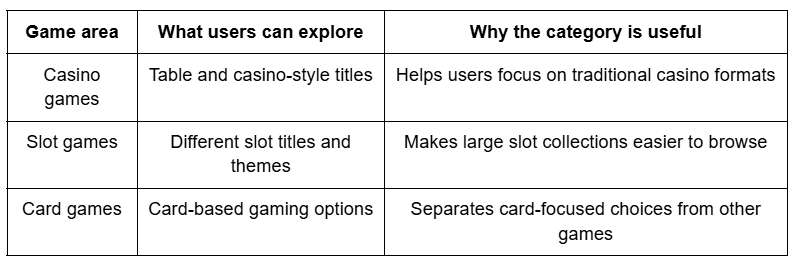
A typical structure might separate casino games, slots, card games, and sports-related content. The exact presentation can vary, but the underlying concept remains the same: related choices should be grouped together so that users can make decisions in a logical sequence.
This structure becomes even more useful when the platform contains titles from several providers. Different providers may have different game styles, interfaces, and collections. Grouping games by category first allows users to focus on the type of entertainment they want, while provider information can become a secondary consideration.

Exploring Different Gaming Providers
Another factor that can influence the browsing experience is the number of gaming providers represented on a platform. Providers can produce different game collections, visual styles, themes, and formats. For users who already have a preferred provider, provider-based navigation can make it easier to locate familiar content.
For newer users, however, provider names may not mean much initially. That is why category-based organization remains useful. Someone can begin by deciding what type of game interests them and then explore the providers represented within that category. Over time, users may naturally develop preferences for particular studios or collections.
This two-level approach—game category first and provider second—can prevent the browsing process from becoming overwhelming. Instead of presenting every possible choice at once, the platform gives users a sequence of decisions. First choose the general game type, then examine the available titles or providers.
Users researching terminology may also encounter resources using the phrase rtp คือ when looking into return-to-player concepts. Understanding terminology can help users interpret game information, although any displayed percentages or game characteristics should always be checked against the current information provided by the platform or game provider.
Finding Games Across Different Devices
Modern users may access gaming platforms through desktops, laptops, tablets, or smartphones. A straightforward navigation structure becomes particularly valuable on smaller screens because mobile interfaces have less physical space for displaying menus and large collections simultaneously.
A mobile-oriented option such as a ku web app may provide a more convenient way to access a platform through a browser-based experience, depending on the service's current availability and configuration. The important point for game discovery is that the navigation system should remain understandable regardless of screen size.
On a desktop, a user might have enough space to see multiple categories at once. On a smartphone, those same categories may be placed behind a compact menu. In either case, recognizable labels and logical organization help users understand where they are and where they can go next.
This is especially useful for returning users. Once someone learns where particular game categories are located, they can repeat the same navigation pattern without having to relearn the interface each time. Familiarity turns a complicated catalog into something much easier to navigate.
Why Simple Navigation Matters
Imagine opening a website with hundreds of games and no obvious categories. Even if the platform has an impressive selection, finding a particular type of game could quickly become frustrating. The problem would not be a lack of content; it would be a lack of structure.
That is why game navigation plays such an important role in the overall browsing experience. Search tools, categories, menus, provider filters, and popular-game sections each give users another way to narrow their choices. Together, these features can transform a large collection into a series of manageable decisions.
For someone who already knows exactly what they want, navigation provides a faster route. For someone who is simply browsing, it provides context. Users can move from one category to another, compare titles, inspect available information, and decide what interests them without feeling that they have to examine the entire catalog.
The same principle applies to almost any digital library. A streaming service uses genres, a shopping site uses departments, and a gaming platform uses game categories. The objective is not to hide the size of the catalog but to make that size easier to navigate.
Using the Web to Reach KUBET
When researching KUBET or related gaming information, users may encounter links such as https://kubet-th.click/ or pages referring to เว็บku. Because websites, domains, and access methods can change, users should verify that they are visiting an official and trustworthy destination before entering account credentials or personal information.
It is also sensible to check the current terms, age requirements, privacy information, and local laws applicable to online gaming. Responsible browsing starts before a game is selected. Users should understand what a platform offers, how accounts work, and what protections or restrictions apply in their location.
Once access is established through an appropriate source, the same discovery principles apply: start with the category that matches your interest, examine the available titles, and use additional filters or provider information when available. There is rarely a reason to rush through a large catalog. Taking a moment to understand the layout can make subsequent visits much more straightforward.
A Simple Approach to Discovering Your Favorite Games
The easiest way to navigate a large collection is to move from broad choices to specific ones. Start by identifying the general type of entertainment you want. If you are interested in slots, go directly to that category. If you prefer card games, begin there instead of reviewing unrelated sections.
From that point, compare the available titles and look for information that matters to you, such as game type, provider, theme, or other displayed characteristics. If a popular-games section exists, it can provide another useful starting point when you do not have a specific title in mind.
The process can be summarized as follows:
Choose a game category that matches your current interest.
Browse available titles rather than searching the entire catalog.
Check provider information if you have a preference.
Use popular-game sections when you want suggestions.
Review game details and platform information before making a choice.
Play responsibly and follow applicable age, legal, and platform requirements.
This approach keeps discovery practical. Instead of treating the entire platform as one enormous collection, you turn it into smaller sections that are easier to evaluate.
Final Thoughts
KUBET's organized approach to online casino games, slots, card games, sports-related selections, and provider collections can make game discovery feel less complicated. Categories provide direction, popular-game sections can offer inspiration, and provider information gives experienced users another way to narrow their choices. Together, these elements create a more structured browsing experience than simply placing every available title on a single page.
The biggest advantage of clear organization is its simplicity. Whether someone arrives with a specific title in mind or simply wants to explore, a logical menu gives them a starting point. With a category-first approach, users can gradually narrow their choices rather than attempting to process an entire game library at once.
As with any online gaming service, users should also verify the legitimacy of the website they access, review applicable rules and requirements, protect their account information, and keep their gaming activity within sensible limits. A well-organized platform can make finding games easier, but responsible and informed choices still belong with the user.
FAQs
1. What types of games can users find on KUBET?
Depending on the current platform offering, users may encounter categories covering casino-style games, slots, card games, sports-related options, and other gaming selections. Categorization makes these different formats easier to browse.
2. How does the KUBET menu help with game discovery?
A structured KUBET menu can separate games into recognizable categories, allowing users to move directly toward the type of game they want instead of browsing an entire catalog.
3. Can users browse games by provider?
Provider information may be available alongside individual titles or through platform navigation. This can be helpful for users who already recognize and prefer particular gaming providers.
4. What does RTP mean in online games?
RTP generally refers to return to player, a theoretical percentage associated with certain games over a large number of plays. It should not be interpreted as a guarantee of an individual result, and users should review the specific game's current information.
5. Is mobile access available?
Mobile availability and access methods can change over time. Users should check the platform's current official information and use a legitimate, secure access method rather than relying on unverified downloads or links.


